
Japanese Bento Boxes: A Small Box Filled with Care and Balance
Updated: Aug 1
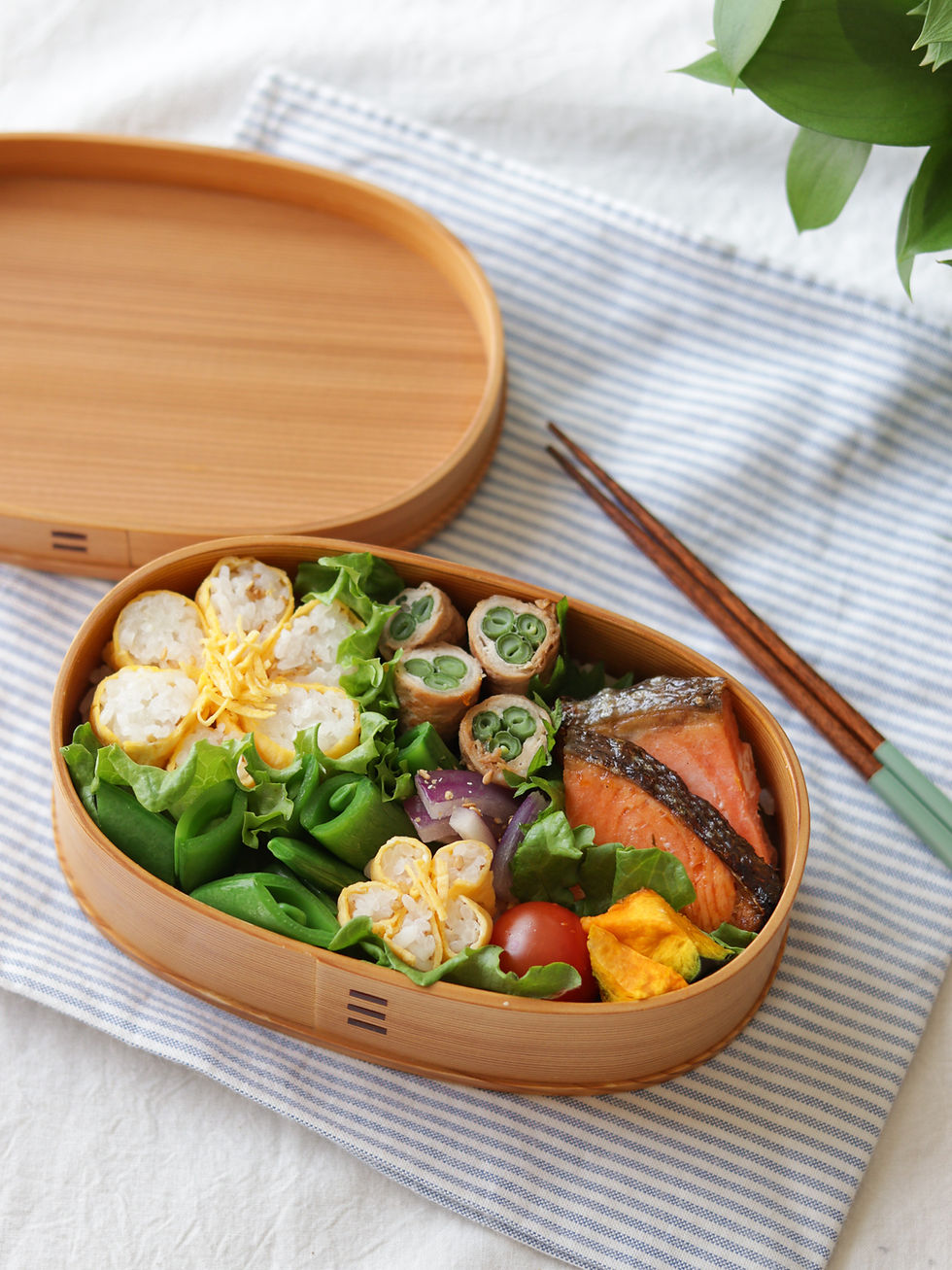
I have made and eaten more bento boxes than I can count. Yet even now, opening the lid of a Japanese bento box brings a special sense of excitement. What should I eat first? What might be hidden beneath the colorful side dishes?
A slightly sweet tamagoyaki, or Japanese rolled omelet, meat-wrapped vegetables, and other familiar favorites—each dish brings back a memory. For school sports days or before an important exam, my mother would fill my bento with the foods I loved most. When I was not feeling well, she would pack extra fruit for me.
Even now, I remember her thoughtfulness as one of my most comforting food memories.
I have had the opportunity to write three cookbooks about bento. Through developing and preparing so many bento meals, I have come to realize that a bento is much more than a portable lunch. It is a small box that can hold care, enjoyment, and nutritional balance.
Why Homemade Bento Is So Special
One of the greatest advantages of a homemade bento is that it can be adapted to the person who will eat it.
The seasoning, portion size, ingredients, and fat content can all be adjusted according to that person’s health, appetite, preferences, schedule, and lifestyle. This degree of personalization is something even the best bento shop cannot fully provide.
When I make a bento for myself or my family, I want it to remain delicious after it has cooled, while also providing the nourishment needed for the day. I continue to find bento-making fascinating because there is always something new to learn.
Why a Japanese Bento Box Can Make Nutritional Balance Easier
Because a bento box has a fixed amount of space, it naturally makes portion size easier to see.
Choosing a bento box that is appropriate for the person eating from it can help keep the overall amount of food—and therefore its energy content—within a suitable range.
A well-planned Japanese bento usually contains three basic elements:
A staple food, such as rice, bread, or noodles
A main dish made with fish, meat, eggs, tofu, or other protein-rich foods
Side dishes featuring vegetables, mushrooms, seaweed, beans, or other plant foods
Having these elements together in one box makes it easier to create a balanced meal. Fruit or dairy products can also be added separately, depending on the person’s needs and what they eat during the rest of the day.

A commonly used Japanese guideline is to divide the bento approximately into three parts staple food, one part main dish, and two parts vegetable-based side dishes. This is known as the 3:1:2 bento box method.
The ratio refers to the amount of space each type of food occupies when the bento is viewed from above. It is a practical guide rather than a strict rule and can be adjusted for age, activity level, appetite, and health needs.
My Simple Rules for Planning a Bento
When planning a bento, I usually begin with the main dish.
First, I choose a protein-rich dish made with ingredients such as fish, meat, eggs, or soy products. Next, I select a staple food—rice, bread, or noodles—that complements it. Finally, I add the side dishes.
I also try not to repeat the same seasoning throughout the box. If every dish has a similar sweet soy sauce flavor, for example, the meal can begin to feel monotonous.
Combining different flavors—savory, slightly sweet, tangy, or gently spiced—helps keep the bento enjoyable until the very last bite. Using different cooking methods and textures also creates variety: something grilled, something simmered, something crisp, and something soft.

How to Prepare a Safe Bento
Because a bento is often prepared several hours before it is eaten, food safety requires particular care.
1. Start with clean, dry equipment
Wash your hands thoroughly before cooking and packing the bento. Make sure that the bento box, dividers, utensils, and silicone cups are completely clean and dry.
2. Cook ingredients thoroughly
Meat, fish, eggs, and other foods that require cooking should be heated thoroughly. Particular care is needed with thick pieces of meat, meatballs, rolled dishes, and egg dishes because the center may take longer to cook.
3. Cool the food promptly before packing
Hot rice and freshly cooked dishes release steam. If the lid is closed while the food is still warm, condensation can collect inside the box, creating extra moisture.
Spread freshly cooked food out when necessary so that it cools promptly. Pack it only after the steam has escaped and the food has cooled sufficiently. Avoid leaving cooked food at room temperature for an extended period.
4. Remove excess moisture
Moisture encourages bacterial growth and can also cause flavors from different dishes to mix.
Drain simmered vegetables well, cook sauces until excess liquid has evaporated, and use dividers or individual cups to separate moist dishes. Fresh fruit and raw vegetables should be washed carefully and dried thoroughly. During warm weather, packing them in a separate container is a safer choice.
5. Reheat make-ahead dishes thoroughly
Freshly prepared food is generally the best choice for a bento. If using food prepared the day before, reheat it thoroughly before packing, then allow it to cool promptly.
6. Use utensils when packing
After cooking, avoid touching ready-to-eat food directly with your hands. Use clean chopsticks, tongs, or other utensils when placing food in the box.
7. Keep the bento cool until mealtime
Use an insulated lunch bag and an ice pack when necessary, especially during warm or humid weather. Keep the bento away from direct sunlight and other warm places, and eat it as soon as reasonably possible.
A Small Box with a Personal Message
A bento does not need to be elaborate or perfectly arranged. What matters most is that it suits the person who will eat it.
A favorite dish before an important day, a lighter meal when someone is not feeling well, or an extra serving of vegetables for a busy week—these small adjustments are part of what makes a homemade bento special.
A bento may be small, but it can express a great deal: care for someone’s health, knowledge of their preferences, and the simple hope that they will enjoy opening the lid.
Ready to put these basics into practice? See my step-by-step guide to packing a Japanese bento box, including the order of foods, color, flavor, and seasonal ideas.


Comments