
How to Pack a Japanese Bento Box: Order, Color and Flavor
Updated: Aug 1

A beautiful bento is not created simply by placing colorful foods in a box. The order in which the foods are packed helps everything stay neatly in place, while the choice of flavors, textures, and cooking methods determines how enjoyable the meal will be several hours later.
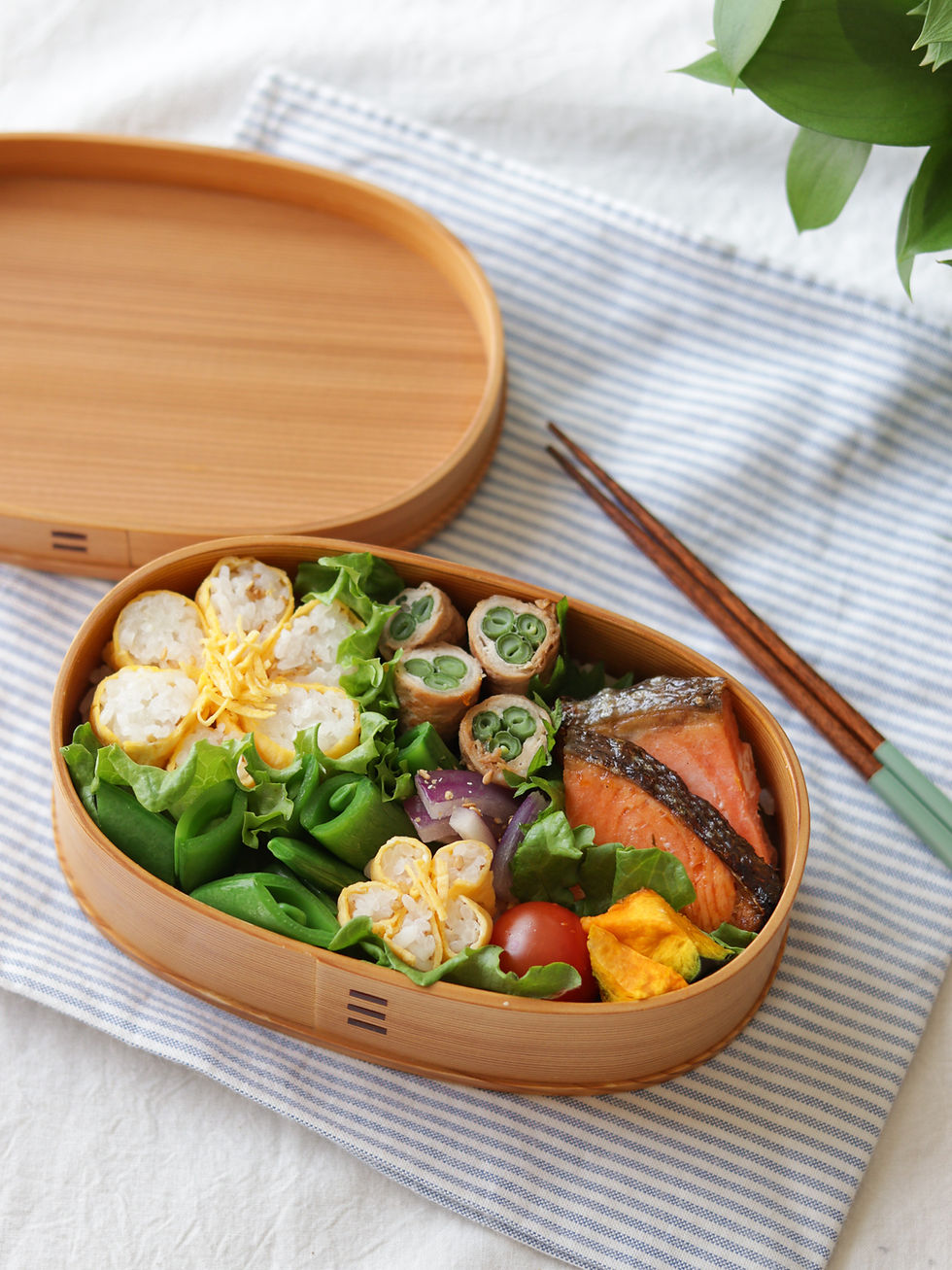
Over the years, I have developed a simple method for packing a Japanese bento box. It begins with the rice and largest dish, then works gradually toward the smaller, more flexible foods that fill the remaining spaces.
Plan the Bento Before You Pack It
Before I begin packing, I choose the main dish and decide which staple food—usually rice, but sometimes bread or noodles—will go with it. I then select side dishes that add contrast rather than repeating the same seasoning.
For example, if the main dish is teriyaki chicken or meatballs with a sweet soy glaze, I may pair it with lightly pickled vegetables, simply seasoned broccoli, or an egg dish rather than another side with a similar sweet sauce.
Contrasting flavors, colors, and textures prevents the meal from becoming monotonous and makes it enjoyable until the last bite.
How to Pack a Japanese Bento Box in Five Steps
When I pack a bento, I usually follow this order:
Rice or another staple food
The largest main dish
Firm side dishes that hold their shape
Flexible side dishes placed in cups
Small foods to fill the remaining spaces
1. Begin with the rice
Rice usually occupies the largest area of the box, so packing it first helps define the space available for the other dishes.
I place the rice in the box gently without pressing it down too firmly. Tightly compressed rice can become dense and hard after it cools, while lightly packed rice retains a more pleasant texture.
After packing the rice, allow excess steam to escape and cool it promptly before adding the other dishes or closing the lid.
2. Add the largest main dish
Next, I position the main dish, such as grilled fish, teriyaki chicken, meatballs, tamagoyaki, or a tofu-based dish.
The main dish becomes the visual anchor of the bento. Placing it early makes it easier to decide how the smaller side dishes should be arranged around it.
3. Add firm side dishes
Foods that hold their shape are packed next. These might include tamagoyaki, roasted vegetables, firm vegetable rolls, or well-drained simmered vegetables.
These dishes create small sections within the box and help support softer foods. They also prevent the contents from shifting while the bento is being carried.
4. Add flexible side dishes in cups
Softer side dishes that can be adjusted to fit the available space are added next.
Dressed vegetables, mashed sweet potato, hijiki salad, potato salad, or finely cut cooked vegetables can be placed in individual cups. The cups help contain moisture and prevent the flavors of different dishes from mixing.
5. Fill the small gaps
Finally, I fill the remaining spaces so that the food does not move during transportation.
Small cooked vegetables and other dry side dishes are useful for this purpose. Cherry tomatoes are also convenient for filling gaps and adding a bright touch of color.
When using cherry tomatoes, remove the stems before washing because dirt and microorganisms can remain in the small crevices around them. Rinse the tomatoes thoroughly and dry them completely with a clean paper towel before packing.
Foods used to fill gaps should not be added only as decoration. They should complement the rest of the meal and be prepared with the same care as the main dishes.
Use Five Flavors and Five Colors as a Guide
One traditional way of creating variety in Japanese cooking is to consider five flavors:
Sweet
Sour
Salty
Bitter
Umami
Not every bento needs to include all five. However, combining contrasting flavors can make a small meal more satisfying.
I also look at five color groups:
Red
Yellow
Green
White
Black or brown
Red may come from carrots or red peppers, yellow from eggs or pumpkin, green from seasonal vegetables, white from rice or daikon, and black or brown from mushrooms, seaweed, sesame seeds, or soy-based seasonings.
Using several colors does not automatically guarantee perfect nutritional balance. However, it often encourages us to include a wider variety of foods and makes it easier to notice when vegetables or other food groups are missing.

That said, I do not believe every bento has to be colorful. Sometimes I enjoy an almost entirely brown bento filled with soy-seasoned, grilled, or fried favorites. Its warm, homestyle appearance has a charm of its own.

Make Food That Still Tastes Good After Cooling
A bento is usually eaten at a school desk, in an office, outdoors, or while traveling—not immediately after cooking at the dining table.
The food therefore needs to remain appealing after it has cooled.
Control moisture in vegetables
Raw cucumber and cabbage can lose their texture or release water while the bento is being stored.
One option is to season them in advance with salt, or with a small amount of shio-koji and vinegar, and then squeeze out the excess liquid thoroughly. This helps the vegetables retain a pleasant texture and prevents water from collecting in the box.
Salt, vinegar, and shio-koji can improve flavor and control excess moisture, but they are not substitutes for proper hygiene and temperature control.
Drain sauces and cooking liquid
Simmered foods should be drained thoroughly before packing. Sauces can be reduced until they coat the ingredients without pooling in the bottom of the box.
Cups and dividers are also useful for preventing moisture and flavors from spreading between dishes.
Add aroma and acidity
Ginger, sesame, citrus, herbs, spices, and moderate acidity can make cooled foods taste more lively without relying on excessive salt.
Different textures also add interest. Combining something crisp with something soft, or something grilled with something lightly dressed, helps make each bite feel different.
Add a Sense of the Season
A bento can express Japan’s changing seasons in a very small space.
In spring, I might include bamboo shoots. In early summer, fava beans—also known as broad beans—bring a fresh green color and a distinctive seasonal flavor. Mushrooms in autumn and root vegetables in winter can also make an everyday lunch feel special.
Including even one seasonal ingredient allows the person opening the box to notice the gradual transition from one season to the next.

A Few Final Food-Safety Checks
Because a bento may be eaten several hours after it is prepared, hygiene and temperature control remain essential.
Cook meat, fish, eggs, and other ingredients thoroughly. Drain excess moisture, and allow hot rice and cooked dishes to cool promptly before closing the lid. Do not leave cooked food at room temperature longer than necessary.
Use clean chopsticks or tongs when packing. When making onigiri, I shape the rice through clean plastic wrap rather than touching it directly with my hands.
During hot or humid weather, I avoid placing moist meat, fish, eggs, or sauces over a large surface of rice. Packing the rice and dishes separately, or choosing drier, fully cooked toppings, makes temperature and moisture easier to manage.
Use an insulated lunch bag and ice packs when needed, keep the bento away from direct sunlight and hot cars, and eat it as soon as reasonably possible.
For more detailed guidance on nutritional balance and food safety, see my complete Japanese bento box guide.
A Bento Does Not Have to Be Perfect
A well-packed bento should be easy to carry, enjoyable to eat, and suited to the person who will open it.
Five colors can be beautiful, but a brown bento can be comforting. Seasonal ingredients can make lunch feel special, but familiar dishes can also become a satisfying meal when they are reheated, cooled, and packed safely.
The goal is not perfection. It is to create a bento that stays neatly packed, tastes good after cooling, and carries a little care from the kitchen to wherever it will be eaten.
Food, styling, and photography by Ayako Narisawa.


Comments